
Music therapy changes lives. Just ask Megan Buhmann, MT-BC ’18, and Danielle Cavazos, MAT, MT-BC ’20.
Both graduates of Saint Mary-of-the-Woods College’s Music Therapy Equivalency Distance program, they’ve been putting that belief into action since 2019, when they co-launched Tidewater Music Therapy, a women-owned, private music therapy practice in Yorktown, Virginia.

It is one of more than 14 million women-owned businesses nationwide, according to the U.S. Census Bureau’s Annual Business Survey, released in 2025.
“We want to help people, and we believe that music is healing,” Cavazos said. “We’ve seen the research and lived it for almost seven years now. People come to us with needs, and we do an assessment. If we think music therapy can help, we get to apply it.”
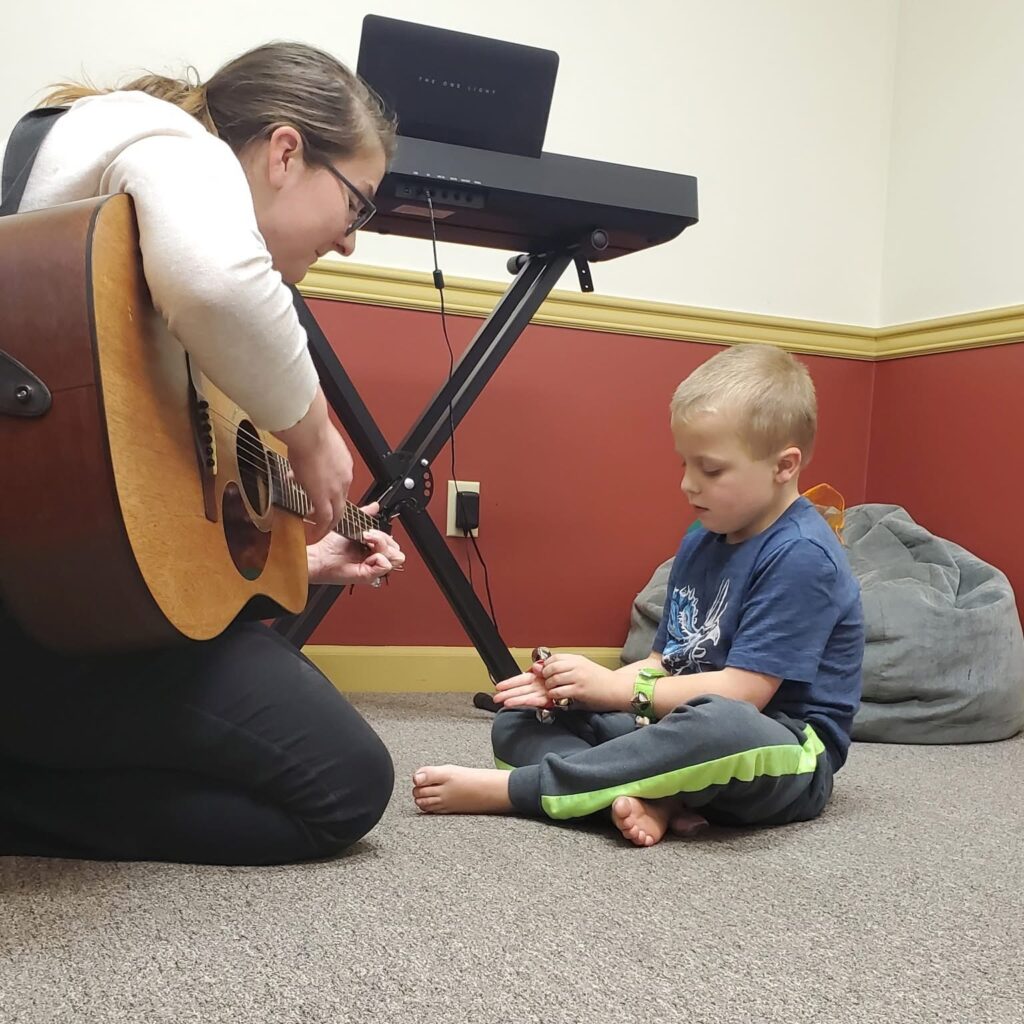
Tidewater Music Therapy offers in-office and in-home music therapy, adapted music lessons, regular music lessons for individuals and small groups, and facility-based music therapy sessions for large groups.
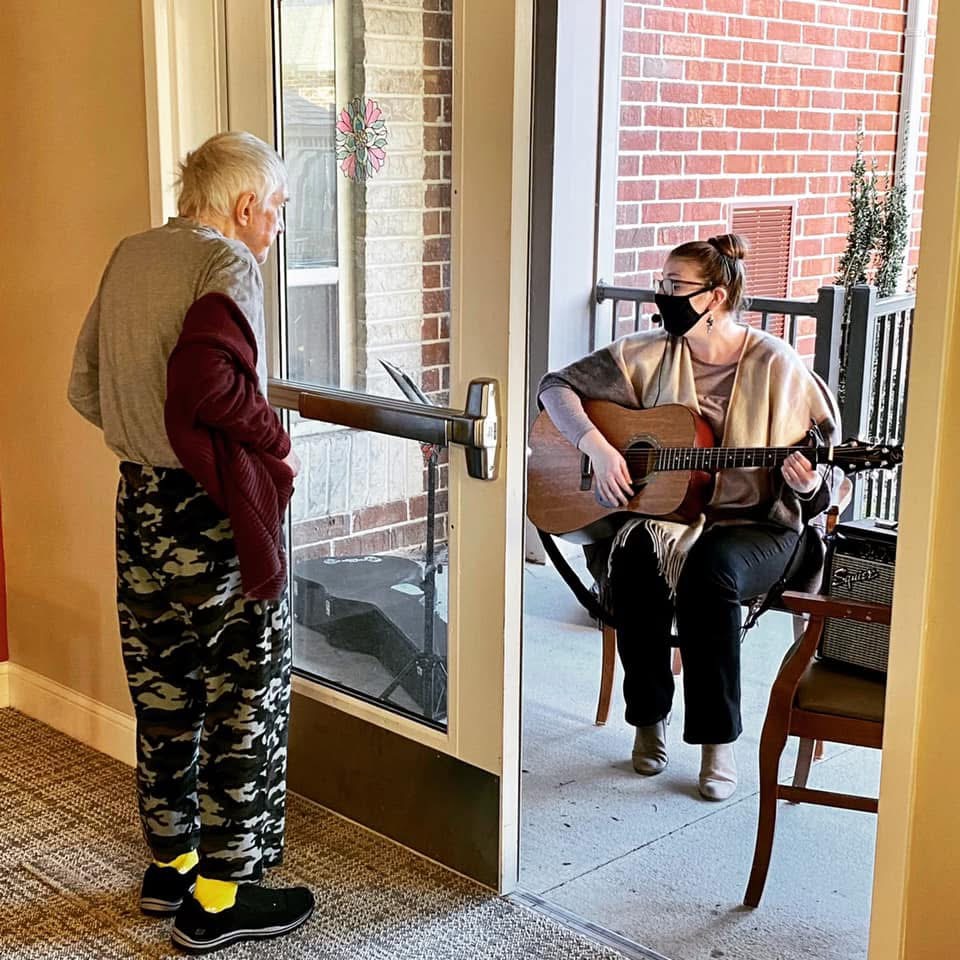
While services are available for clients of all abilities and diagnoses, their most served populations are children on the Autism spectrum, adults in drug and alcohol rehab and older adults in skilled nursing care.
“Neither of us planned to be business owners or work in private practice,” Cavazos said. “The Hampton Roads area where we live just had no access to music therapy. The minute we were MT-BCs and able to practice, we had people reaching out for us to do assessments for loved ones.”
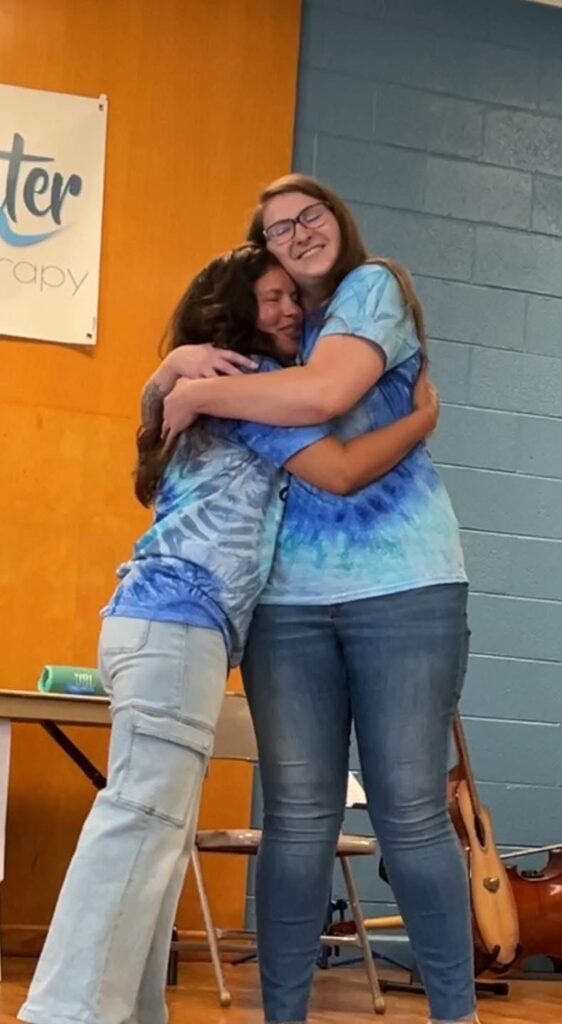
Before the business started, Cavazos and Buhmann met while both studying music at Christopher Newport University in Virginia. In 2016, two years after Buhmann graduated with her undergraduate degree, she felt called to pursue music therapy.
“It’s something I’d heard about when I was auditioning for my undergrad program, and it was still in the back of my mind,” Buhmann said. “I did some research and found the MTED Program at Saint Mary-of-the-Woods College. It gives people who can’t relocate an option to do a distance program in such a niche field, and it has been life-changing for us.”
During Buhmann’s second and final year in the program, Cavazos enrolled in the MTED Program. Approved by the American Music Therapy Association, SMWC is the only college in the U.S. that offers the equivalency program in this format.
“It is designed for those with a bachelor’s degree in music who wish to pursue music therapy, but who have no music therapy degree program near them,” said Larisa McHugh, Ph.D., LPMT, MT-BC, an associate professor of music therapy, MTED program coordinator and chair of SMWC’s Department of Arts, Letters and Music. “MTED students come to campus at the start of each semester for a brief residency and return home to complete coursework and for clinical experience/supervision from an MT-BC in their area.”
When students have completed all requirements, including internship and supplemental courses, they are eligible to sit for the Board Certification Exam.
“Some of our students have gone on to establish a successful private practice, like Megan and Danielle, and others have found employment in the facility where they completed the internship,” McHugh said.
As licensed and board-certified music therapists, Buhmann and Cavazos planned to work at the state hospital where they did clinicals until they learned about their community’s demand for music therapy services. They started renting space at a local church, where they offered services until they opened an office.
“Much of our first few months were about putting a face to our company name. We built our caseloads by getting in the car, taking our business cards and talking to people and facility activity directors about music therapy,” Buhmann said. “We had no idea what we were doing starting a business, but we were determined to figure it out.”
Then, Tidewater Music Therapy hit its first major snag – COVID-19.
“We were a brand-new, very small, two-person private practice trying to navigate doing telehealth as new therapists in what was kind of an uncertain and scary world at that time,” Buhmann said. “We were both still working full-time jobs to help support ourselves, but we saw patients with the limitations at the time. We made it through COVID-19 when many small businesses didn’t. For us to even get through it was a huge success.”
They didn’t do it alone, though. They leaned on other women-identifying business owners to get them through the early days of doubt and imposter syndrome.
“We did some business coaching early on with another local private practice that is owned and run by women, and it was so powerful for us,” Cavazos said. “Just seeing other women doing what we want to do gave us confidence and inspiration. For any woman with a dream, I say find other women who can help you achieve it because they will. Because we’re women.”
Cavazos and Buhmann divide their time between providing services and public outreach to local churches, skilled nursing facilities and schools. Long-term, they hope to open a fully accessible office location.
“We want people in Virginia to have access to music therapy, whatever that means for our business. Virginia, specifically, is a little bit behind, especially the southern portion where we mostly work,” Cavazos said. “We were the only private practice in the area for a while and were most of the boots on the ground putting out the education. There are other private practices now, but we still meet people every day who don’t know what we do. It means we have an exciting opportunity to show them what Tidewater Music Therapy is all about.”
There were many early challenges for the music therapists-turned business owners.
“We’re therapists, musicians and creatives, but we didn’t start as the businesswomen we are now,” Cavazos said. “The business side of things – handling money, setting prices, dealing with taxes – was daunting and confusing in the beginning. We’re in a position now to hire professionals to help us handle that stuff, but in the very beginning, we were just trying our best to figure it out.”
Before they knew it, their successes began to add up as the business expanded in population and numbers.
“As a young therapist, I thought it seemed daunting dealing with so many different types of populations,” Cavazos said. “Now it’s such an exciting part of what we do. Getting to reach so many different people is a huge win for us.”
“Looking back,” Buhmann added, “we may be exceeding where we thought we would be in seven years. We recently hired two music therapists and are still navigating what it means to be a team of five, plus an intern. And all women.”